Kindi Labs
Teaching machines to read Arabic.
Models that read printed and handwritten Arabic, and search Arabic text. We test them on fixed exams and publish the numbers.
Printed Arabic
Kindi OCR reads scanned Arabic newspapers and books, and returns text you can search and correct.
- 1
Block by block
The page is read one text block at a time, so columns and headlines don't run together.
- 2
Line by line
Each block is read line by line, and each word joined up the way it's written.
- 3
Then we measure
We compare the output with the true text, character by character, on 90 newspaper blocks.
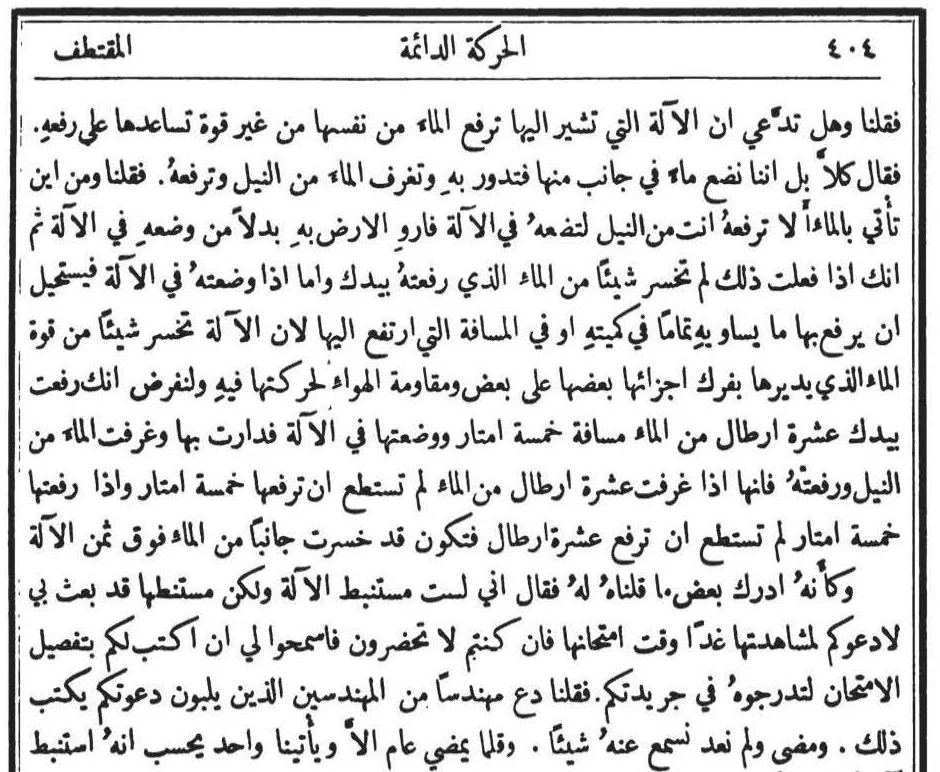
For illustration: a page of Al-Muqtataf, June 1899 (public domain, via the Internet Archive). This page is not part of our test; the percentage is the result on the test described below it. Internet Archive
For illustration: a page of Al-Muqtataf, June 1899 (public domain, via the Internet Archive). This page is not part of our test; the percentage is the result on the test described below it. Internet Archive
| System | Character error rate | 95% interval |
|---|---|---|
| Kindi OCR | 0.89% | 0.6–1.2 |
| Mistral OCR v4.1 | 1.29% | 1–1.6 |
| deep.sa OCR v2.0 | 2.63% | 1.9–3.7 |
| PaddleOCR-VL 1.6 | 5.4% | 4.2–6.5 |
| Tesseract | 6.53% | 4.5–9.3 |
0%2%4%6%8%10% |
MDP-90. The whiskers at each bar show the 95% interval.
Handwriting
Handwriting is harder than print: every writer has their own hand, and every script has its own rules. Kindi HTR reads five historical Arabic scripts, and we score it on the same lines every time.
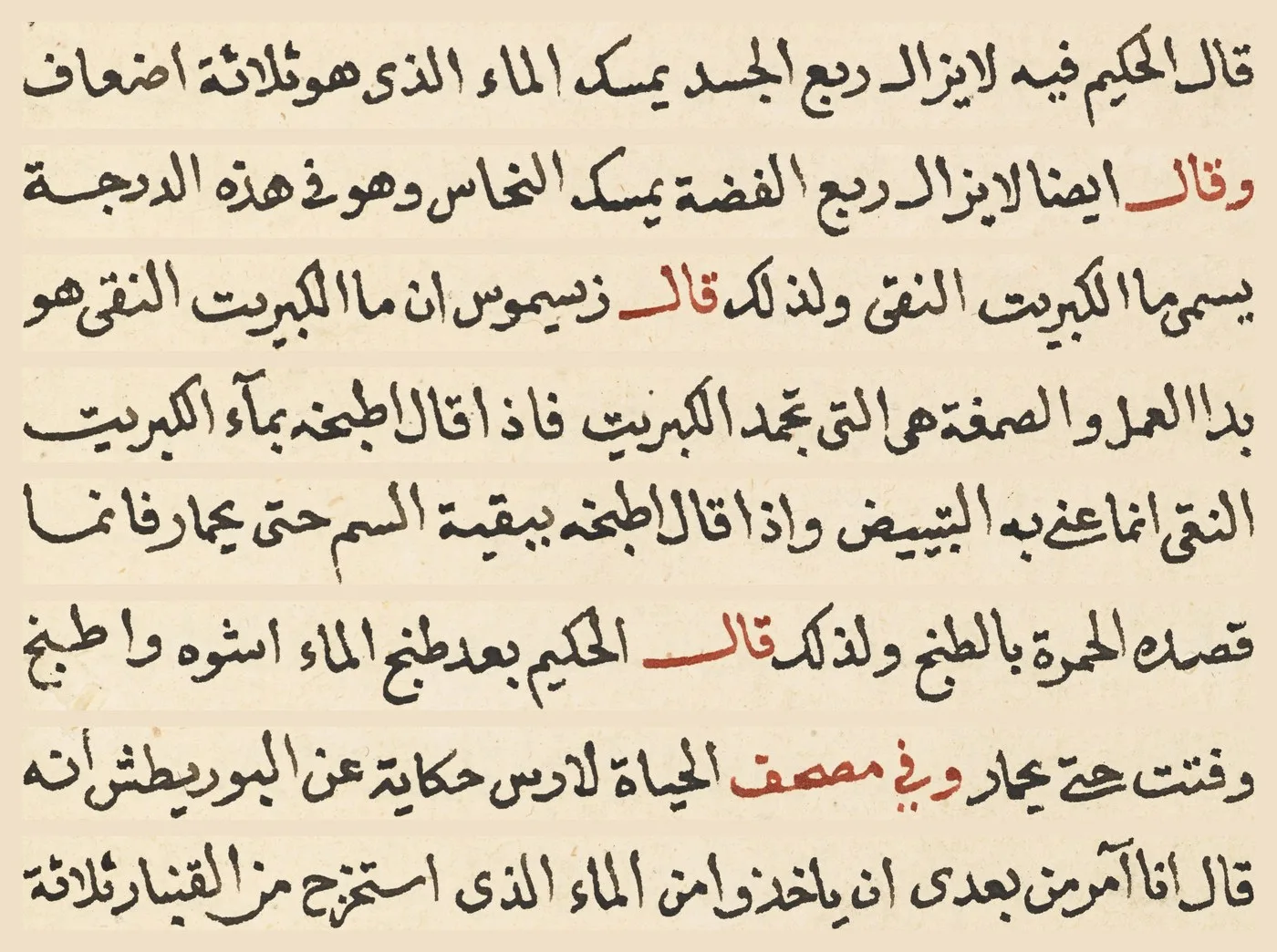
- قال الحكيم فيه لا يزال ربع الجسد يمسك الماء الذي هو ثلاثة اضعاف
- وقال ايسنا لا ينزل ربع الفضة يمسك النحاس وهو في هذه الدرجة
- يسمى الكبريت النقى ولذلك قال زيموس ان ما لكبريت النقى هو
Kindi v0.5 preview: 8.83% (8.45–9.26). HATFormer: 21.46% (20.89–22.04).
| Item | HATFormer | Kindi v0.5 preview |
|---|---|---|
| Oriental | 32.0% | 3.7% |
| Ruq‘ah | 17.9% | 5.8% |
| Nastaliq | 20.7% | 8.2% |
| Ta‘liq | 13.4% | 8.8% |
| Naskh | 21.2% | 9.8% |
| Maghrebi | 33.9% | 10.4% |
| Modern | 41.4% | 15.3% |
Same lines, same score, for every script, on a wider test of 8,136 lines. Values are character error rates. On modern handwriting, three other systems we tested read better than Kindi HTR.
Arabic search
Before an assistant answers, it has to find the right passage. Give laya-ara-rag a question and up to 12 passages, and it picks the one that answers.
We trained it on MIRACL-ar alone. It had never seen the other four sets.
Illustration: a question about which script spread in everyday writing, and eight passages about Arabic scripts. The model's first pick is the Ruq‘ah passage, which is the right one.
Illustration: we wrote the question and passages, and the scores are for display only.
| Item | Base model | laya-ara-rag |
|---|---|---|
| MIRACL-ar (trained on) | 15.3% | 58.8% |
| Mr.TyDi-ar | 17.6% | 63.2% |
| SadeemQuestion | 16.8% | 87.1% |
| MLQA-ar | 13.3% | 58.2% |
| XPQA-ar | 21.3% | 66.5% |
The base is laya-multilingual before our training. Share of questions where the first pick was the right passage.
Playground
Run the models on your own pages.
Upload a scan or a photo, or start with one of our samples. Read the text line by line, see where each line was found, and take the JSON with you.